Staffordshire Fire and Rescue Service reveals rise of over 250 extra incidents in recent months
By Kerry Ashdown - Local Democracy Reporter 14th May 2026
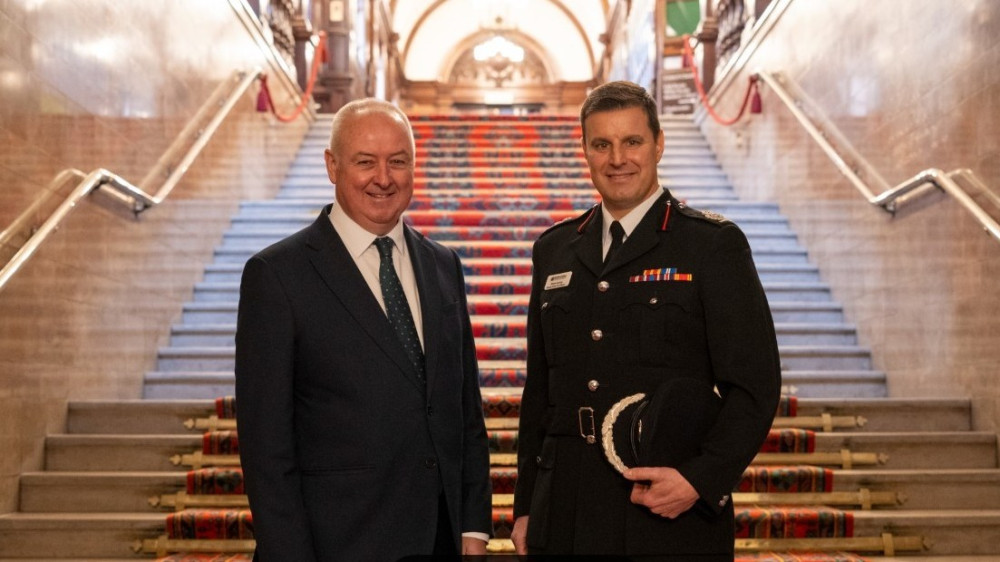


Staffordshire Fire and Rescue Service attended more than 250 extra incidents in recent months compared to the same period last year – and some "unusual" causes have been identified as reasons for the rise.
Between October 2025 and March 2026 the service attended 4,383 callouts – up from 4,127 – a Fire and Rescue Public Performance meeting heard this month.
More than 1,200 of these attendances were fires, and 443 were road traffic incidents. But there were also 821 "special service calls" – up by almost 20% compared to the 687 incidents attended in the same period within the previous year – as well as more than 1,000 false alarms.
Glynn Luznyj, who is set to become Staffordshire's Chief Fire Officer next month, said: "Last summer saw a significant increase, in particular around secondary fires and specifically around grass fires. That's something we're very mindful of and is clearly connected with warm summers as well.
"Over the last couple of quarters (October 2025 to March 2026) there are a few unusual causes for the rises in overall incidents, in particular special service calls which are a range of different incidents the fire and rescue service attend.
"When I've looked into this, there has been an increase in responding to things like hazardous materials like chemicals, which is quite unusual at the moment.
"Under that range as well you have things like gas leaks, which is an area we are having a look at because we want to understand why the fire and rescue service is seeing a sudden increase in responding to domestic properties with gas leaks.
"Clearly they are risky, we do possess equipment and skills and training that can detect things like carbon monoxide, but we want to understand what's the cause around that.
Download our Nub News App!
- It’s FREE and available now- Breaking news notifications
- Your Town in Your Pocket


"In addition there has been things like flooding because we do get flash floods and a large amount of storms and rain patterns, which brings with it acute flooding of properties.
"We still do a lot of assisting other agencies and I'm really keen that we do – things like gaining entry, working alongside police colleagues or assisting ambulance in particular, because we know we are saving lives to get trained ambulance crew into a property where somebody has had a bad fall, medical episode or in distress."
Police, Fire and Crime Commissioner Ben Adams highlighted 1,017 false alarm incidents which were caused by equipment during the six-month period.
There were also 775 false alarm incidents classified as "good intent" attended in this period, in comparison to 676 in the same period within the previous year – a 14.64% increase.
Mr Luznyj said: "We have several categories of false alarms. It's a good thing that more buildings are equipped with fire alarm systems and domestic properties have got smoke alarms.
"But with that you can sometimes have malfunctions, you can have equipment triggered by things like insects, you can have them triggered by all sorts of things that aren't a fire. Unfortunately that does sometimes result in a turnout that's not really required.
"I would say, going to fire control, they're very good at dynamically assessing what is required. Rather than sending three or four fully-crewed fire appliances they may determine that maybe one would be appropriate, based on the information given at the time.
"Some of the good intent ones can be something like a toaster activating a smoke alarm. It can be an opportunity to engage a person, so they're not necessarily a waste of time because they can identify somebody who has had a near miss.

"It allows our crews to come and intervene to educate, sometimes bringing in partner agencies through a referral if it's required and prevent something that's more serious. Whereas they're significant figures, they're not always deemed as waste demand on the fire and rescue service.
"There is a little bit of good news as well in terms of malicious-type incidents – the phone up to waste emergency services' time. We've seen a significant reduction there from 42 to 29 – that's nearly a 31% decrease which is quite positive."
CHECK OUT OUR FREE NEWSLETTER!
5 TOP STORIES EVERY FRIDAY!
Click here to sign up: stoke newsletter

Share: