Three issues facing new council leaders in Newcastle-under-Lyme
By Phil Corrigan - Local Democracy Reporter 13th May 2026
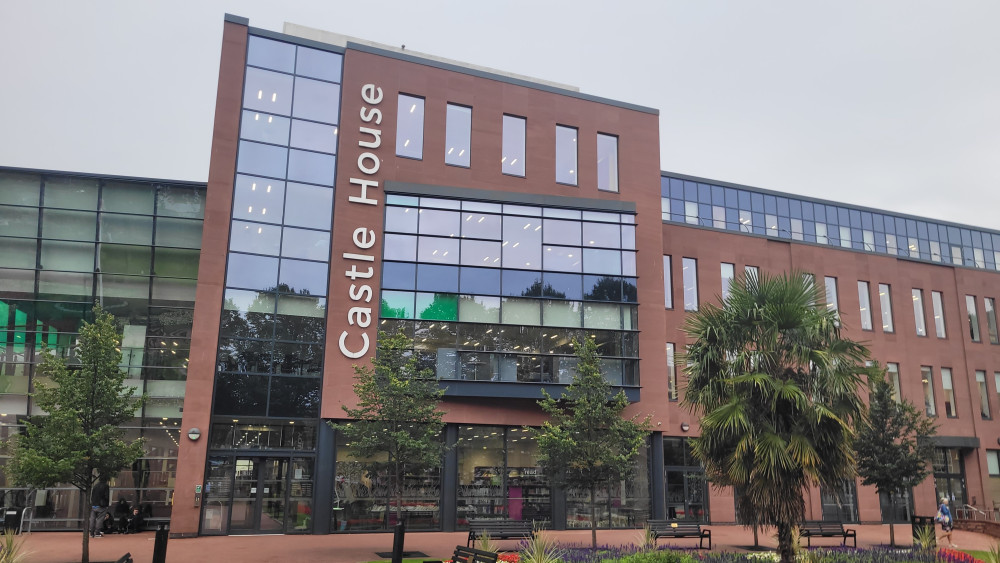


Newcastle-under-Lyme Borough Council will soon be under new leadership following Reform UK's victory in the local elections.
Reform won 27 of the 44 seats on the borough council in Thursday's elections, ending nine years of Tory rule and giving the party a clear majority.
A new council leader and cabinet will be appointed at the annual council meeting on 20 May. But what will Reform do now that they are in charge in Newcastle, and what challenges will they face?
As a lower tier authority, the borough council does not have responsibility for social care or special education – two of the biggest problems facing local councils at the moment – nor is it responsible for potholes or highways.
But there are some some urgent issues that the new administration will find in its in-tray as it takes over the council.
Here are three of the biggest challenges facing the authority:
Local government reorganisation
The biggest task facing the borough council over the next couple of years could well be its own abolition and replacement. All 10 county, city, borough, district councils in Staffordshire and Stoke-on-Trent are due to be replaced with new unitary authorities under local government reorganisation.
Download our Nub News App!
- It’s FREE and available now- Breaking news notifications
- Your Town in Your Pocket


Five options for LGR in Staffordshire were subject to a public consultation earlier this year, and the government is expected to make a final decision on which model will be adopted this summer.
While most councils in Staffordshire favoured some sort of north-south split, the idea of merging with Stoke-on-Trent has always been controversial in Newcastle, ever since it was first proposed more than a century ago.
Under its previous Conservative leadership, the borough council proposed a model which would see Newcastle have its own unitary authority, with the rest of the county being divided into three more unitaries.
Reform UK-led Staffordshire County Council, meanwhile, proposed merging Newcastle with Stafford, Cannock Chase and South Staffordshire into a West Staffordshire unitary.
Under the government's current timetable for LGR in Staffordshire, shadow authority elections would take place next year, with the new councils taking over in 2028. This would mean that Newcastle's newly-elected borough councillors will only end up serving half their two-year terms.
But critics have expressed scepticism over whether it will be possible to get the new unitaries up and running so quickly.
Local plan
Next month the borough council's cabinet is due to consider a report on the adoption of the new local plan.

This plan, which sets out how 400 homes a year will be built across Newcastle up to 2040, as well as earmarking land for employment and other uses, has been through several rounds of consultation, and was examined by the planning inspector last year.
But Newcastle's local plan was produced under an old system, and it will deliver less than 80 per cent of the borough's housing requirement as calculated under the government's new planning framework.
This means that the borough council will have to start work on its next local plan as soon as the new one is adopted.
Newcastle was among 39 local authorities which have been given until 30 June to publish a notice of intention to commence plan-making. The next plan will have to show how 545 homes a year can be delivered across the borough.
Walleys Quarry
The long-running battle over the Walleys Quarry landfill site has been one of the biggest issues facing the borough council in recent years.
In late 2024 the Environment Agency finally closed down the landfill following thousands of complaints from residents over noxious gas emissions, with its operator Walleys Quary Ltd collapsing shortly afterwards.
Since then the EA has carried out works on the site to prevent the risk of pollution, and for more than a year the issue of hydrogen sulphide emissions has almost completely gone.

However, while the problem appears to have been solved in the short-term, the site's long-term future is still to be settled.
Borough council leaders have previously said that it will require the government to step in and provide the resources to permanently close and restore the site, and that local taxpayers should not have to foot the bill.
They have also repeatedly asked for a public inquiry into the Walleys Quarry affair, but these requests have so far been rejected by the government.
CHECK OUT OUR FREE NEWSLETTER!
5 TOP STORIES EVERY FRIDAY!
Click here to sign up: stoke newsletter

Share: