

Lawyer shares how AI could reshape clinical negligence claims
By Nub News Reporter 16th Sep 2026


The growing use of artificial intelligence in healthcare could fundamentally change the clinical negligence landscape, with lawyers warning that questions remain over who should be responsible when AI-supported decisions go wrong.
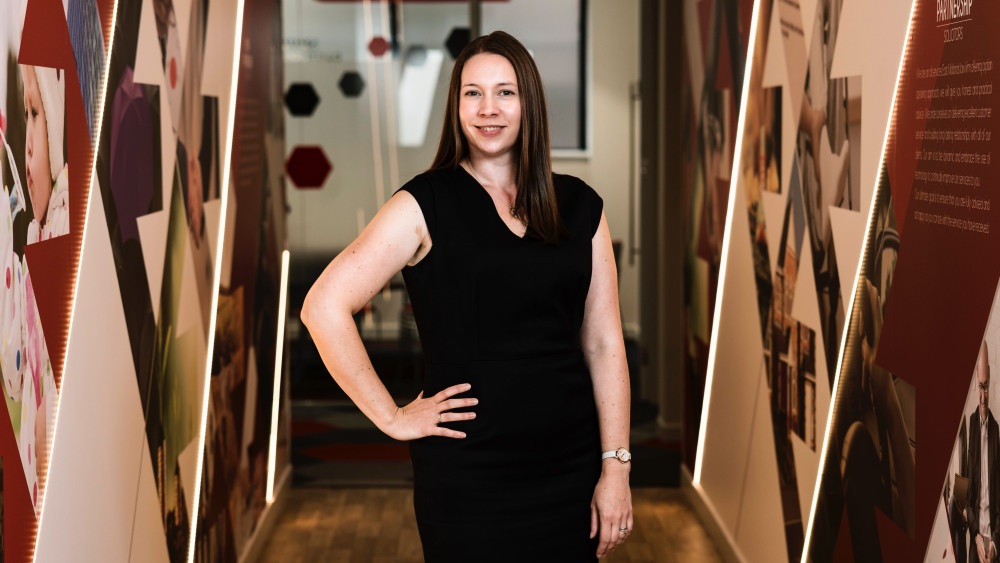
Anna McLeod is a Partner at clinical negligence lawyers Smith Partnership, which has an office in Stoke-on-Trent.
She said doctors are already using AI for everything from recording consultations to helping inform diagnosis and treatment decisions.
However, while the technology is advancing quickly, the legal position remains relatively clear.
"At the moment, regardless of how a doctor reaches their decision or what tools they use, the doctor remains liable for the advice they give," Anna said.
"AI currently sits alongside all of the other resources available to a doctor.
"They can use NICE guidelines, NHS care pathways, their own experience and other sources of information, but ultimately they still have to apply that to the individual patient sitting in front of them and make their own decision."
The position becomes more complicated when an AI system itself produces inaccurate information and presents it as fact, which could give a doctor false confidence in using the AI generated information.
Download our Nub News App!
- It’s FREE and available now- Breaking news notifications
- Your Town in Your Pocket


Anna said this creates a developing "gap" between the responsibility carried by healthcare professionals and that of the companies developing AI products.
"If a doctor relies on inaccurate AI information and that causes harm to a patient, at the moment it is still the doctor who is likely to be responsible for that decision," she said.
"But as these products become more advanced and start doing more technical jobs, the question is whether liability should also sit with the developers of those systems. It is their product producing the information, so there is an interesting issue around where that accountability should ultimately sit."
Anna believes this could eventually lead to more clinical negligence claims involving multiple defendants.
"We may start to see claims where both the healthcare professional and the AI developer are involved.
"I don't think we will necessarily reach a point where a doctor can simply step away and say, 'That was the AI's fault and nothing to do with me', because ultimately they can still review the information, disagree with it and use their own clinical judgement.
"But you can certainly see circumstances where there is an AI error that hasn't been recognised or overruled by a clinician, and responsibility becomes more complicated."
The issue also works in reverse. A doctor could potentially face criticism for choosing not to follow an AI recommendation if that recommendation later proves to have been appropriate.

"If an AI system suggested that a patient should have an X-ray, for example, and the doctor decided against it, but it later transpired that imaging would have identified the patient's condition, the doctor may then have to justify why they ignored that recommendation.
"There may be perfectly sensible, patient-specific reasons for doing that. But if the recommendation was reasonable in the circumstances and was wrongly ignored, then there could potentially be criticism.
"It is similar to the way doctors already have to consider guidelines and clinical pathways. There can be good reasons for departing from them, but they need to be able to explain why."
Another area likely to attract increasing attention is whether patients should know when AI has been involved in their care.
Transparency around AI use could become particularly important where technology has influenced a diagnosis or treatment recommendation.
"If a doctor says that AI has been involved in reaching a particular conclusion, that could open up an interesting conversation between the doctor and patient," she continued.
"The patient may want to understand how much influence the AI has had and whether the doctor independently agrees with it.
"At the moment, though, a doctor could not simply defend a decision by saying, 'The AI told me to do it'. The doctor is still responsible for their actions.

"The problem is that AI can give you information very confidently and parcel it up as though it is completely factual. That means there always has to be a sense-checking process and a healthy level of scepticism from the person using it.
"In healthcare, the consequences of failing to recognise that an answer is wrong could obviously be very serious."
Despite the risks, Anna believes AI has the potential to deliver significant benefits to both doctors and patients.
The technology can help prioritise patients, suggest diagnostic tests, flag possible diagnoses, highlight prescribing conflicts and potentially reduce administrative pressure on healthcare professionals, as well as communication.
"One interesting example is AI listening to a consultation and then generating the clinic letter that goes to the patient afterwards," Anna said.
"That could actually be really beneficial because AI could help explain the position more clearly while making sure key points aren't missed, potentially leaving the patient feeling much better informed.
"There is going to be a role for AI in healthcare in the future. That is just a fact. The important question is how junior doctors are educated to understand the risks and balance what the technology is telling them against their own real-world experience.
"Every patient is different. Conditions can have common features, but the way illnesses and injuries present can still vary enormously from person to person. That experience of seeing and treating patients throughout a medical career remains incredibly valuable."

Rather than reducing the number of clinical negligence claims, Anna believes AI is more likely to change the nature of them.
"I don't necessarily think we will see fewer claims," she explained.
"What we may see is a shift in the issues that have to be considered and potentially in who the defendants are.
"Humans are fallible, but at the moment AI is fallible too. It can make mistakes. As its use increases, the legal landscape is going to have to develop alongside it.
"The technology is already being used, so the focus has to be on making sure it is being deployed safely, ethically and transparently. As AI becomes more advanced, there will inevitably be questions about whether the current balance of responsibility remains appropriate.
"We are not at the point where those questions have all been answered yet, but they are increasingly going to become part of the clinical negligence landscape."
This is a sponsored article. If it wasn't for sponsors like Smith Partnership, our news site would not be possible - thank you.
If you own a local business and would like to sponsor us, get in touch at [email protected].
CHECK OUT OUR FREE NEWSLETTER!
5 TOP STORIES EVERY FRIDAY!
Click here to sign up: stoke newsletter

Share: