David Williams MP: 'Ceramics is far more than a chapter in our history'
By David Williams MP 28th Jun 2026
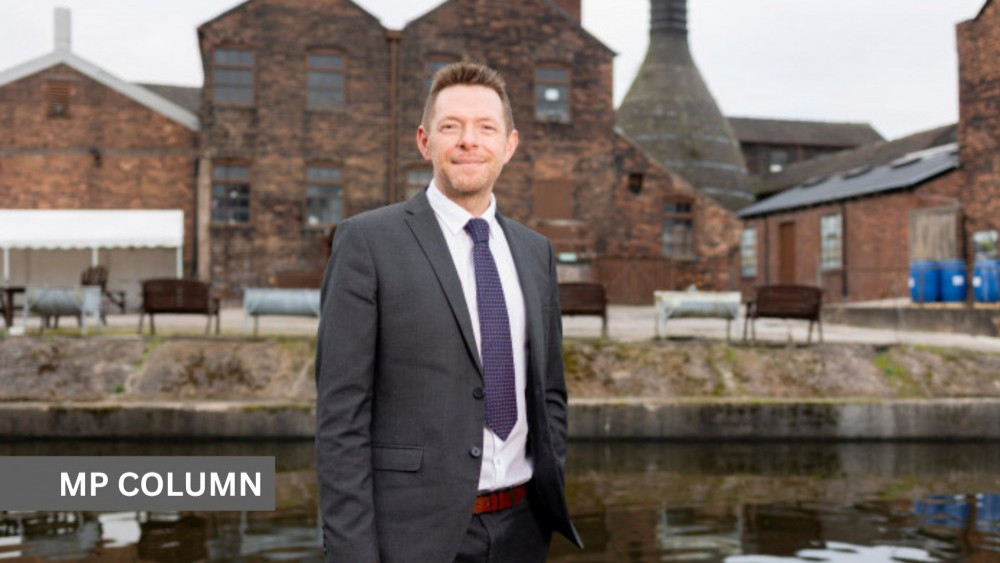


In this week's MP column, David Williams, MP for Stoke-on-Trent North and Kidsgrove, discusses the ceramics industry.
For too long, Stoke-on-Trent has been viewed through the lens of what it once was rather than what it still is.
The story often told about places like ours is that the industries which built them are relics of the past. That globalisation has made manufacturing towns less relevant, and that prosperity will increasingly be concentrated elsewhere.
It is a narrative that many communities across the Midlands and North have heard for decades.
Recently, the Government took an important step towards challenging that assumption.
Labour's £120 million support package for the ceramics sector is not simply an investment in an industry. It is a recognition that the future of Britain's economy cannot be built by focusing on a small number of already successful places while overlooking the industries and communities that helped build the country in the first place.
In Stoke-on-Trent, ceramics is often spoken about as part of our heritage. And of course, our pottery industry is woven into the identity of the city.
But ceramics is far more than a chapter in our history. It remains a major employer, a source of highly skilled work and a key part of our local economy.
Download our Nub News App!
- It’s FREE and available now- Breaking news notifications
- Your Town in Your Pocket


Across North Staffordshire, businesses have spent years battling rising energy costs, intense international competition and ongoing economic uncertainty. Yet despite those pressures, manufacturers have continued producing world-class products that are recognised around the globe.
The resilience of the sector has been remarkable. But resilience alone cannot overcome every challenge.
That is why this support package is so significant.
The funding includes £60 million to help firms invest in modern equipment, improve energy efficiency and strengthen long-term productivity. A further £60 million will provide support for businesses facing immediate operational pressures.
For many manufacturers, the challenge has never been a lack of demand or a lack of expertise. The challenge has been the cost of operating energy-intensive facilities in an increasingly competitive global market.
By helping firms manage those costs while investing for the future, this package provides both short-term support and long-term confidence.
Confidence matters.
When businesses believe they have a future, they invest, recruit and expand. When they do not, investment slows, skilled workers move elsewhere and communities begin to feel left behind.

Stoke-on-Trent has experienced the consequences of industrial decline before. We know what happens when governments speak warmly about manufacturing but fail to provide the support needed for industries to remain competitive.
That is why local Labour MPs, working alongside trade unions and industry leaders, have consistently made the case for ceramics in Parliament. I have raised these issues repeatedly because I do not accept that industrial communities should simply be expected to manage decline while growth is concentrated elsewhere.
In truth, the case for supporting ceramics has become stronger, not weaker.
The specialist knowledge and manufacturing expertise found in Stoke-on-Trent are increasingly important to sectors that will help shape Britain's future economy. Advanced ceramics are now used in renewable energy systems, heat pumps, aerospace technology and a range of high-value manufacturing processes.
The skills developed in our city are not just relevant to the industries of yesterday. They are helping to power the industries of tomorrow.
That reality should shape the way we think about industrial policy.
For too long, national debate has framed manufacturing and innovation as though they exist in separate worlds. Stoke-on-Trent demonstrates that the opposite is true. Our ceramics sector combines traditional skills with cutting-edge technology, export potential, research and green innovation.
Supporting the sector is not an act of nostalgia.

It is a strategic investment in an industry that continues to deliver economic value, skilled employment and international competitiveness.
There is still more work to do. No single announcement can solve every challenge facing the ceramics industry.
But after years in which many local people felt their concerns were not being heard, this investment sends a clear signal.
Our industries matter. Our communities matter. And the future of Stoke-on-Trent should be viewed not as a story of decline, but as a story that is still being written.
CHECK OUT OUR FREE NEWSLETTER!
5 TOP STORIES EVERY FRIDAY!
Click here to sign up: stoke newsletter

Share: