

North Staffordshire teenager died from “extremely rare” condition just days after suspected food poisoning, inquest hears
By Kerry Ashdown - Local Democracy Reporter 24th Feb 2026


A caring teenager who "wanted to make the world better" died from a rare condition just six days after being admitted to hospital with suspected food poisoning symptoms, an inquest has heard.
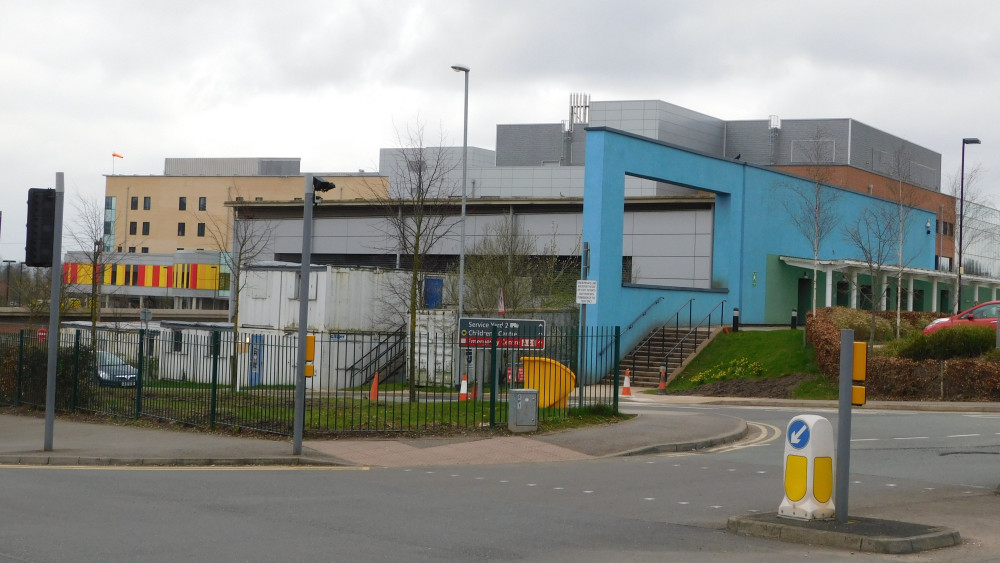
Lois Francis was just 17 when she died at Royal Stoke University Hospital, after suffering multi-organ failure caused by Shiga toxin-producing E-coli.
The bacteria led to Lois developing haemolytic uraemic syndrome (HUS), which affected her kidneys. HUS – which was described as "incredibly rare", occurs in just two out of every 100,000 patients per year in Europe and the US, an inquest heard on Monday (February 23).
In a moving pen portrait read out at Monday's inquest hearing in Stoke (February 23), her family spoke of her caring nature and support for the LGBTQ+ community, as well as her creative talents.
"Lois was a bright, funny, deeply loving child who filled every room she entered with warmth and laughter", her family said.
"She cared deeply for those in need. Her compassion wasn't just something she spoke about, it was something she lived.
"She had a deeply creative spirit, she loved to write and would create entire worlds of her own. Acting gave her a way to express her personality and she brought confidence and passion to every performance, she was someone who wanted to make the world better through her art.
"When her niece was born, she embraced being an auntie. She gave so much love and made life so much better by simply being herself – she will forever remain in our hearts.
Download our Nub News App!
- It’s FREE and available now- Breaking news notifications
- Your Town in Your Pocket


"Still we're left with questions we cannot answer – how can someone so full of life be gone? How could she be taken by something she should be able to overcome?"
"Losing her left a space that cannot be filled."
The Talke Pits resident, who was studying acting at Newcastle under Lyme College, was initially admitted to Leighton Hospital in Crewe on September 23 2023 after suffering bloody diarrhoea at home, the inquest heard.
She had a normal temperature, but tenderness in her stomach due to nausea, and blood tests revealed evidence of inflammation.
She was given IV fluids for rehydration and anti-sickness medication, as well as starting a course of antibiotics.
But on September 26 her kidney function – which had initially been considered normal when she was first admitted to hospital – had deteriorated, and the results of a stool sample indicated the presence of Shiga toxin-producing E-coli, at which point antibiotics were stopped.
She was transferred to Leighton Hospital's critical care unit, where she could receive more nursing and care.
A decision was made to transfer Lois to the renal department at Royal Stoke University Hospital, but she was not taken there until the following day, September 27, when a bed became available at the kidney unit, the inquest heard, and antibiotics were restarted.

Dr Christopher Thompson, critical care and renal consultant at University Hospitals of North Midlands (UHNM) NHS Trust, which runs Royal Stoke, said: "The reason the team carried on with antibiotics was purely miscommunication.
On September 28 Lois became significantly more unwell; she developed neurological symptoms and struggled to communicate, developed problems with her vision.
"She had two hours of haemodialysis to clear her body of toxins, but not clearing the Shiga toxin. Because she had neurological symptoms she had a CT scan to look at her brain in more detail."
The scan showed "subtle abnormalities" that looked to have been because of ischemia (insufficient blood flow to the brain). Her condition continued to deteriorate and a referral was made to critical care, but she was not transferred there for several hours, the inquest heard.
Dr Thompson said: "The kidney team were worried, her family were worried and she was referred to the critical care team. I think the critical care resident doctor did not recognise how sick Lois was at that point.
"The plan was to keep an eye on Lois on Ward 124 and it wasn't until the early hours of September 29, when she deteriorated further, she was referred to critical care. At that point she was not getting better and the decision was escalated to the critical care consultant.
"I don't think it necessarily had a material effect on how she progressed. The brain injury she had had already begun.
"However, I think she could have had further observation management and treatment of seizure activity would have been done with one to one or one to two nursing, rather than one nurse looking after eight patients. I think the process was not as good as it should have been."

Lois was sedated and went for an MRI scan. A further CT scan, to provide more urgent imaging, showed she had "diffuse severe brain swelling", Dr Thompson said. "There was damage in the brain that was not going to be reversible.
"She had treatment to see if we could reverse the swelling with hypertonic saline. Everything accelerated and she passed away on September 29."
Lois' mum, Sarah Francis, told the inquest the care her daughter had received at Leighton Hospital had been "incredible".
But she said: "What I can't comprehend is a girl with no underlying health conditions, becomes mildly unwell with a tummy upset, can seven days later not be here."
Dr Stephen Lord, intensive care consultant at UHNM, said: "It was the speed of deterioration and progression of her disease that caused her death. HUS is incredibly rare and in the handful of cases I have ever seen from medical records, Lois' is the fastest.
"I can fully understand how hard it is to comprehend what happened here, given she was a young fit girl and this happened in such a short time".
The inquest continues.
CHECK OUT OUR FREE NEWSLETTER!
5 TOP STORIES EVERY FRIDAY!
Click here to sign up: stoke newsletter

Share: