Newcastle-under-Lyme Borough Council scraps sustainable environment strategy
By Phil Corrigan - Local Democracy Reporter 1st Jun 2026


Councillors in Newcastle-under-Lyme have clashed over 'net zero' and environmental policy – but what are the facts behind the slogans?
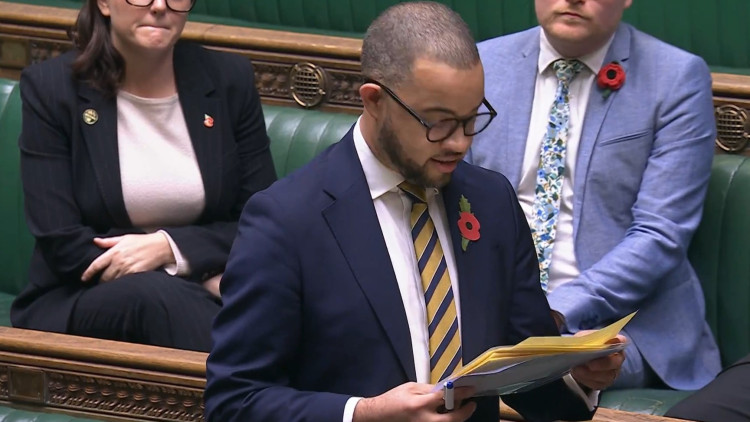
Jonathan Gullis, the leader of the new Reform UK administration on Newcastle-under-Lyme Borough Council, has scrapped the authority's sustainable environment strategy, which includes a commitment to make the organisation carbon neutral by 2030.
He also says that Reform will put forward a motion to formally cancel the declaration of a 'climate emergency', which councillors passed in 2019.
Cllr Gullis has branded the declaration as 'political virtue signalling' and the move towards net zero as 'the worst kind of groupthink', saying his administration will instead focus on the priorities of local people.
But opposition Conservative group leader Simon Tagg, who led the council up until this month's local elections, has accused the Reform administration of 'political posturing' on the issue.
Cllr Tagg insists that the authority's environment strategy has always focused on practical action that improved the local environment and saved taxpayers' money.
The Reform administration now plans to review all the programmes and spending associated with the environment strategy.
But what are the facts?
Download our Nub News App!
- It’s FREE and available now- Breaking news notifications
- Your Town in Your Pocket


Declaration of 'climate emergency'.
At the full council meeting in April 2019, opposition Labour councillors proposed a motion calling on the council to 'acknowledge that there is a climate emergency' and to make Newcastle 'a carbon-neutral borough' by 2030.
The motion noted that 41 other councils had already passed climate emergency motions.
An amended version of the motion was passed by the council.
Adoption of sustainable environment strategy
In December 2020, Conservative cabinet members agreed to adopt the council's new sustainable environment strategy and action plan.
A key aim of the strategy was for the council to achieve a 'net carbon neutral position' for its activities and operations by 2030. This would be achieved by reducing the council's carbon emissions and offsetting activities such as tree-planting.
The strategy set out the council's aspiration to become an 'exemplar authority' known for both preserving and protecting our local environment for the present and future.

The 17-page document proposes actions in a number of areas including waste and recycling, energy consumption, travel and transport and 'behaviour change'.
While the UK has a statutory requirement to achieve net zero by 2050, there are no legal duties for local authorities to set or achieve targets relating to carbon emissions – meaning the borough council is free to scrap its own commitments in this area.
What actions are included in the strategy and what have they cost?
Major projects include a £7.4 million capital investment to decarbonise the council's 'flagship' sites, such as the Jubilee 2 leisure centre and Knutton Lane Depot.
According to a recent update, work to install LED lighting, solar panels, new heating systems and other upgrades at these buildings is progressing, with all the schemes expected to be complete by the end of 2030.
Meanwhile, replacing the council's vehicle fleet with zero and ultra-low emission vehicles is expected to cost £10.76 million – according to a council report, this is 'adequately covered' under the authority's existing 10-year fleet replacement programme.
The council has previously acknowledged that there are 'some financial and resource implications' for decarbonising its fleet and buildings, with external funding being accessible for much of this work.
For example, last year the council secured £3.2 million of external funding to install air source heat pumps and solar thermal at Jubilee 2.

According to the latest report on the strategy in January, revenue savings will also be realised by reducing energy consumption and moving to renewables.
The report gives the example of four of the council's streetscene pickups being replaced with electric models in 2024, which has resulted in a £5,112.50 savings on fuel costs.
Linked to the environment strategy is the council's tree-planting strategy. This has resulted in more than 24,000 trees being planted in the borough over the last five years.
What has the strategy achieved?
Cabinet members in the previous Conservative administration received an update on the environment strategy in January, setting out the progress that had been made in various areas such as waste and recycling, biodiversity, net zero and behaviour change.
The report notes a number of recent actions, including the deployment of 17 new refuse collection vehicles fitted with electric bin lifts to reduce noise and save fuel, and new perennial planting at Queens Gardens and other green spaces.
In 2024/25, the council's engagement and behaviour change team took part in more than 80 conferences, events and other engagements, working with a number of schools to introduce climate action plans, and training 100 staff in 'carbon literacy'.
According to the report, the council produced 1,904 tonnes of carbon emissions in 2024/25, an increase on the previous year but less than half the amount produced in 2012/13.
The report says the overall trajectory 'remains on a downward trend'.
CHECK OUT OUR FREE NEWSLETTER!
5 TOP STORIES EVERY FRIDAY!
Click here to sign up: stoke newsletter

Share: