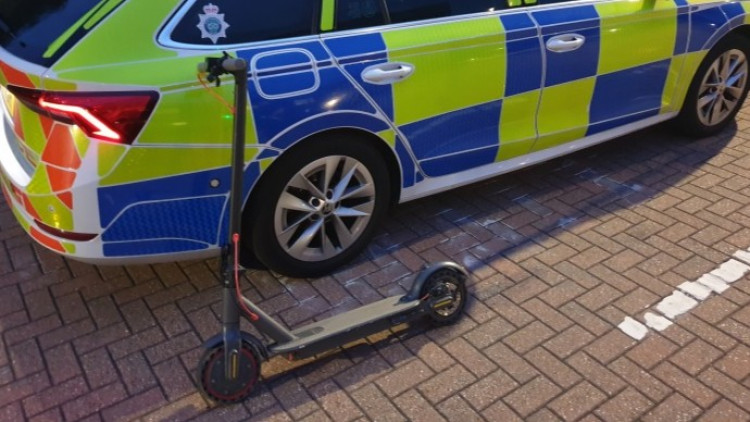
What happens at your first appearance at Magistrates’ Court? Stoke-on-Trent lawyer explains
By Nub News Reporter 4th Nov 2026



A Stoke-on-Trent lawyer has explained what happens at a first appearance at the Magistrates' Court.
Andrea Wilkes is a Senior Associate in Smith Partnership's Crime team in Stoke-on-Trent and has over 21 years' experience in criminal law.
She said: "The Magistrates' Court is where criminal proceedings in England and Wales usually begin. More serious cases may then be sent to the Crown Court
"Receiving a Magistrates' Court summons or attending court for the first time can be stressful, especially if you have never had dealings with the criminal justice system before.
"Understanding what happens at your first appearance can help you know what to expect and prepare for the process ahead."
The Stages of a Magistrates' Court Case
1) You are charged or receive a postal summons or written requisition
"If you receive a postal summons or written requisition (following a police interview where you have been released under investigation) to attend the Magistrates Court or you are charged by the police following a period of police bail or police detention, you will be provided with a signed charge sheet and a bail notice.
"Your first appearance will always take place in the Magistrates Court.
Download our Nub News App!
- It’s FREE and available now- Breaking news notifications
- Your Town in Your Pocket


"The charge sheet will have your personal details, details of the charge, a case reference number and the date and time you are required to attend the Magistrate's Court.
"You will also be given notification of any bail conditions you are subject to which simply direct that you attend court on a given date or time or include as an example (but not exhaustive) not to contact persons, restricting your attendance at certain locations and even reporting to the police station."
2) Instruct a solicitor as soon as possible
"You should instruct a solicitor as soon as possible. They will be able to assess your case and advise you on the next steps, including the funding options available to you.
"Once formally instructed, your solicitor will be able to obtain the available evidence (known as the IDPC) and discuss this with you before your first hearing.
"This will allow you to receive advice about the strength and weaknesses of the prosecution's case and the options available to you before important decisions are made at court."
3) Attend your first hearing at the Magistrates' Court
"What happens at this hearing will depend on the offence you have been charged with and the circumstances of your case.

"At the hearing, the court will confirm the charge or charges against you.
"Depending on the type of offence, the court may also deal with your plea, determine whether your case will remain in the Magistrates' Court or proceed to the Crown Court, and consider bail."
4) Enter your plea
"If your case is ready, you may be asked to indicate or enter a plea at your first hearing.
"If, after receiving advice on the strengths and weaknesses of the prosecution's case, you plead guilty, you will be convicted.
"The Magistrates' Court may sentence you immediately or adjourn sentencing until another date. For example, the court may require further information from the Probation Service in the form of a pre-sentence report before deciding the appropriate sentence.
"In some circumstances, the case may instead be sent to the Crown Court for sentencing.
"If you plead not guilty to the charges and a Magistrate's Court trial is required, the court will need to be informed of the issues in the case, what witnesses are required, time estimate and the court will identify a suitable future trial date.

"We will then proceed to prepare your case for trial and build a defence.
"This will include instructing any necessary experts, obtaining your further instructions, and finding and speaking to any defence witnesses."
5) Decision on where your case will be heard
"Where your case will ultimately be heard depends on the category of offence you have been charged with.
"Summary only offences can only be tried in the Magistrates' Court. These generally include less serious offences.
"If you plead not guilty to a summary only offence, your case will proceed towards a trial in the Magistrates' Court.
"Either way offences can be dealt with in either the Magistrates' Court or the Crown Court.
"If you indicate a not guilty plea, the court will consider whether the case is suitable to remain in the Magistrates' Court. If the Magistrates decide that it is suitable, you may have the right to choose trial in the Crown Court instead.

"Indictable only offences are the most serious category of criminal offences and can only be tried in the Crown Court. If you are charged with an indictable only offence, your case will begin in the Magistrates' Court before being sent to the Crown Court."
6) Bail or remand
"Once the court has taken a plea from you and determined where you case should be heard, or adjourned the matter for sentence or trial, the court will decide whether bail is appropriate.
"If you appeared before the court by way of postal summons or written requisition, then you are likely to be granted unconditional bail the only condition being that you must surrender to the court on date and time directed."
Who are the key parties involved?
Andrea explained that the court will be held by either:
- Magistrates - trained volunteers, up to three, who are assisted by a legal advisor
- A District Judge who is a qualified Solicitor/Barrister
She said: "There will also be a Legal Advisor who provides legal advice to the Magistrates and ensures that they follow lawful processes throughout the hearing.
"The Prosecutor (Crown Prosecutor), represents the victim or complainant, and our solicitors will represent you, the defendant."
What Types of Cases Are Heard in the Magistrates' Court?
There are three types of criminal offences in England and Wales, Andrea explained.
These are:
- Summary only offences – this includes minor Assaults, Criminal Damage, low level thefts, road traffic matters and some public order offences.
- Either way offences – this includes Dangerous Driving, ABH, Handling stolen goods, Theft, Burglary, Affray, Assault on an emergency worker.
- Indictable only offences – this includes Murder/Manslaughter, Robbery, Rape, S18 GBH, Death by Dangerous Driving
Andrea said Summary only offences can only be tried at the Magistrate's Court then you will be expected to enter a plea of guilty or not guilty at the first hearing.
She added: "If after we take you through the evidence and advised you on the strengths and weaknesses of the case we advised you to plead guilty to the charges, the Magistrates/judge will decide what sentence should be imposed.
"You will be given full 1/3 credit for your guilty plea.
"If the Magistrates or district judge cannot sentence you on the day due to the offence being so serious that they are considering a custodial sentence or they are considering a community penalty and they require further information or input from the Probation service (that cannot be provided on the day) the case may be adjourned for a pre-sentence report.
"The report will be prepared by the probation service. You will be given a time, date and location to attend an appointment with them.
"You will be expected to discuss openly your involvement in the offence and attend all appointments as directed."
Andrea explained that if you are charged with an either offence, this is an offence which can be dealt with either in the Magistrates Court or Crown Court
She said: "You will be expected to indicate a plea. If after we have advised you of the strength and weaknesses of the prosecution's case, you plead guilty you will be convicted at the Magistrates Court but could still be sent to the Crown Court for sentence if the sentencing powers of the Magistrate's Court are insufficient.
"If you plead not guilty or make no indication of plea the court will decide where your case should heard either the Magistrates or Crown Court and will invite representations from both the Prosecution and Defence.
"The Magistrates/judge may decide to send the case to the Crown Court for trial, and a date and time will be fixed for a plea and case management hearing (PTPH) where you formally asked to indicate a plea."
Andrea added: "If you are charged with an Indictable Only offence, the magistrates have no power to take a plea and the case will be sent to the Crown Court for a pre-trial preparation hearing at the Crown Court. "
What Sentences Can the Magistrates Give?
"If you plead guilty or are found guilty following a trial, the Magistrates' Court will decide what sentence should be imposed," Andrea said.
She added: "The sentence will depend on the offence, its seriousness, your circumstances and any aggravating or mitigating factors relevant to the case."
The Magistrates' Court has a range of sentencing options available, including:
- Fines - The amount will depend on factors including the offence, its seriousness and your financial circumstances. A fine can also be imposed alongside certain other orders or penalties.
- Community Sentence - This can include unpaid work, rehabilitation activity, treatment requirements or restrictions on where you can go or what you can do.
- Driving Disqualification
- Custodial Sentence - The Magistrates Court has the power to sentence you to a maximum of 12 months.
Andrea also provided answers to some frequently asked questions:
What should I wear at my Magistrates appearance?
"There is no dress code, but you should ensure to dress smartly for a Magistrates appearance and avoid wearing jeans or any clothing with clothing that could cause offence."
Can I bring friends or family to the Magistrates?
"In most occasions you can bring friends or family along to your Magistrates hearing – there is a public gallery that they can sit in. In some occasions, they where there is a young or vulnerable defendant, they may be allowed to sit with the defendant."
What should I bring to my Magistrates appearance?
"Your solicitor will advise you on the exact things you should bring, however, it is always advisable to bring your court summons letter and any ID requested.
"You may bring your phone, but it must be turned off before entering the courtroom."
Andrea added: "You should always have legal representation if you are appearing in the Magistrates.
"Our expert criminal defence solicitors in Stoke are here to help you."
To contact the Smith Partnership team, telephone 0178 232 4454, complete our contact form or send an email via [email protected].
This is a sponsored article. If it wasn't for sponsors like Smith Partnership, our news site would not be possible - thank you.
If you own a local business and would like to sponsor us, get in touch at [email protected].
CHECK OUT OUR FREE NEWSLETTER!
5 TOP STORIES EVERY FRIDAY!
Click here to sign up: stoke newsletter

Share: