


Staffordshire NHS Trust ordered to boost insulin storage security in neonatal unit following public inquiry
By Kerry Ashdown - Local Democracy Reporter 8th Oct 2026
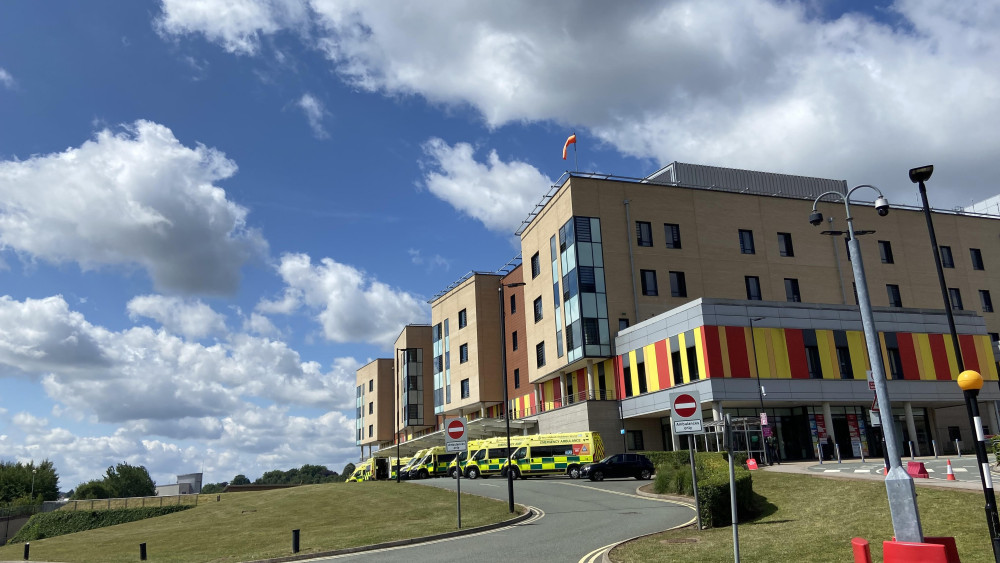


The trust running Royal Stoke University Hospital has been told to install CCTV cameras to cover medicine storage areas in its neonatal unit by the end of November as part of national measures to reduce the risk of harm to babies.
The neonatal unit must also meet requirements for access control and storage of insulin by March 31 2027, hospital bosses were told at the latest University Hospital of North Midlands (UHNM) Trust board meeting.
The actions are being taken in response to the Thirlwall Inquiry, which examined events at the Countess of Chester Hospital between 2015 and 2018.
The inquiry follows the conviction of Lucy Letby, who was a neonatal nurse at the Countess of Chester Hospital, for the murder of seven babies and the attempted murder of seven others between 2015 and 2016.
The inquiry considered how concerns were raised and handled, whether opportunities to prevent further harm were missed, actions of managers, executives, boards, regulators and external organisations and what changes are required across the NHS to prevent similar events occurring again.
Its findings were published last month and a summary was presented to the UHNM Trust Board on Wednesday (October 7).
The report said: "On 21 September 2026 NHS England wrote to all trusts advising that, whilst the Government considers the recommendations in full, a number of actions should commence immediately.
"NHS England has requested that all trust boards formally consider the findings of the inquiry and seek assurance that equivalent circumstances could not arise within their own organisations.
Download our Nub News App!
- It’s FREE and available now- Breaking news notifications
- Your Town in Your Pocket


"The inquiry identified a series of systemic failures that enabled patient harm to continue over a prolonged period.
"Whilst the actions of an individual practitioner were central to the events examined, the inquiry concluded that failures in organisational culture, leadership, oversight and escalation arrangements significantly contributed to missed opportunities to intervene.
"The 17 recommendations collectively seek to strengthen patient safety, safeguarding, governance, oversight and organisational culture within NHS organisations.
"Key themes include enhanced neonatal safety measures, including CCTV monitoring, baby monitoring technology and strengthened controls over insulin storage and access, (and) improved safeguarding arrangements, including mandatory safeguarding training for all staff and board members, revised employment requirements and a national Suspicion of Deliberate Harm Protocol.
"NHS England has already identified several actions requiring immediate local implementation. UHNM has commenced work in response to these requirements.
"Overall, UHNM has existing governance, safeguarding, Freedom to Speak Up and patient safety arrangements in place.
"However, the publication of the inquiry provides an opportunity to review these arrangements against the inquiry findings, identify any gaps and strengthen assurance that concerns raised by staff are heard, escalated appropriately and acted upon promptly in the interests of patient safety."
Donna Brayford, Director of Midwifery at UHNM, told the board on Wednesday: "By November 30 we are being asked to implement CCTV in all medicine storage areas in child health and neonatal.

"We haven't had any further external advice as we stand at the moment.
"By March we have to implement secure storage around insulin, being able to track who has removed insulin and where it has been administered to each patient.
"We have had no information about external funding from NHSE."
Non-executive director Professor Katie Maddock raised concerns about a "two tier" system being created across the hospital however, if extra controls around insulin storage and access were being put in place in one area and not other departments.
CHECK OUT OUR FREE NEWSLETTER!
5 TOP STORIES EVERY FRIDAY!
Click here to sign up: stoke newsletter

Share: