

Plans lodged for up to 54 homes in Newcastle-under-Lyme green belt
By Phil Corrigan - Local Democracy Reporter 11th Mar 2026
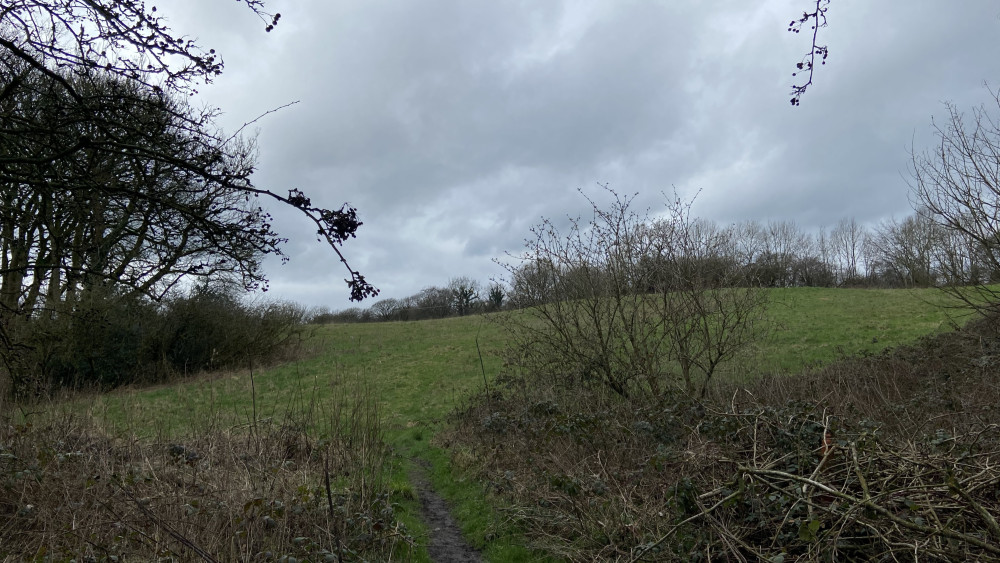


Six planning applications could see up to 54 homes built in the Green Belt – leading to concerns over 'salami slicing'.
Trentdale Investments has submitted six individual applications to Newcastle Borough Council, each seeking permission in principle for one to nine homes on land north of Pepper Street, Keele.
The company has already secured permission in principle for six to nine homes on an adjacent site.
Trentdale says the land, just outside Silverdale, qualifies as 'grey belt', meaning development can be appropriate – an argument that council planners accepted with the first application.
But objectors say the approach being taken by the applicant raises major concerns with the planning system, and could result in a piecemeal erosion of the Green Belt. They warn that they could take legal action to prevent this happening in Newcastle.
Permission in principle is an alternative way of securing consent for small housing schemes of up to nine homes. Once a scheme has permission in principle, a follow-up application covering technical details is required.
The borough council has seen 30 permission in principle applications over the past 12 months, mostly for sites in the Green Belt.
In its application, Trentdale argues that the six parcels of land covered by the new application should be seen in the same context as the approved scheme, as they are all in the same field.
Download our Nub News App!
- It’s FREE and available now- Breaking news notifications
- Your Town in Your Pocket


The application states: "The six additional sites that form these new proposals would complete the developable area of the whole field and have been arranged to adjoin each other with no gaps.
"If permission in principle is granted for these sites, then the subsequent course of action would be to follow up with technical details for each site, or alternatively to prepare and submit a planning application for the whole site.
"That planning application would include a suite of technical documents to demonstrate that the redevelopment of the entire field is technically sound."
Keele Parish Council is opposing the six applications, after objecting to similar Green Belt schemes in recent months.
Parish council chair Graham Bibby believes that applicants are exploiting the permission in principle process to develop swathes of the Green Belt, while avoiding the scrutiny and conditions that would come with a single application for a major development.
He said: "Firstly, with regard to the previous permission in principle applications, not just in Keele but in neighbouring parishes, we maintain that they should not have been approved.
We believe that they set a very concerning precedent and will result in a salami slicing of the Green Belt through multiple applications, avoiding appropriate scrutiny and the golden rules protecting the Green Belt in the National Planning Policy Framework.
"With regard to the six applications for land north of Pepper Street, we are very strongly opposed. We believe this is a very clear case of salami slicing. There are ample legal precedents to suggest that salami slicing should be challenged, and we will be quoting these in our objection."
What is 'permission in principle'?
Permission in principle was introduced in 2018 as a cheaper and faster alternative to a traditional planning application, for residential developments of up to nine homes. Under this system, planning consent is granted in a two-stage process.
At the permission in principle stage, council planners are only able to consider whether the location, type and amount of development is acceptable in principle.
All other issues, such as visual impact and highway safety, are considered at the technical details consent stage.
Councils have to determine the initial planning in principle applications within five weeks.
While this system was introduced eight years ago, before 2025 Newcastle Borough Council had only ever had one permission in principle application.
But over the last 12 months, the authority has received 30 such applications, half of which have been approved. So far only one technical details application has been submitted, which has yet to be determined.
What is 'grey belt'?
Nearly all of the permission in principle applications in Newcastle have been for sites within the Green Belt. And most of these have taken advantage of another recent change in planning law: the concept of 'grey belt'.
Development in the Green Belt usually requires 'very special circumstances' to be acceptable – this protection is removed for grey belt sites.

Land is considered to be grey belt if it does not make a 'strong contribution' to the purposes of the Green Belt, such as preventing towns from merging or checking unrestricted urban sprawl.
In addition to these planning issues, Newcastle also currently lacks a five-year housing land supply, meaning a 'tilted balance' in favour of sustainable development applies to every application.
Planning committee members have previously complained that their 'hands are tied' when it comes to permission in principle applications on grey belt sites.
But Cllr Bibby believes the borough council should still be resisting the applications, and says that parish councillors could take legal action to block the Pepper Street development.
Cllr Bibby said: "If these applications are approved we will be looking to work with other parish councils to seek a judicial review. This isn't just an issue for Keele parish – this is going to have national consequences."
The borough council is due to make a decision on the Pepper Street applications by 30 March.
CHECK OUT OUR FREE NEWSLETTER!
5 TOP STORIES EVERY FRIDAY!
Click here to sign up: stoke newsletter

Share: