


Keele opens 'state-of-the-art' insectary to advance malaria and pest control research
By Liana Snape 22nd May 2026
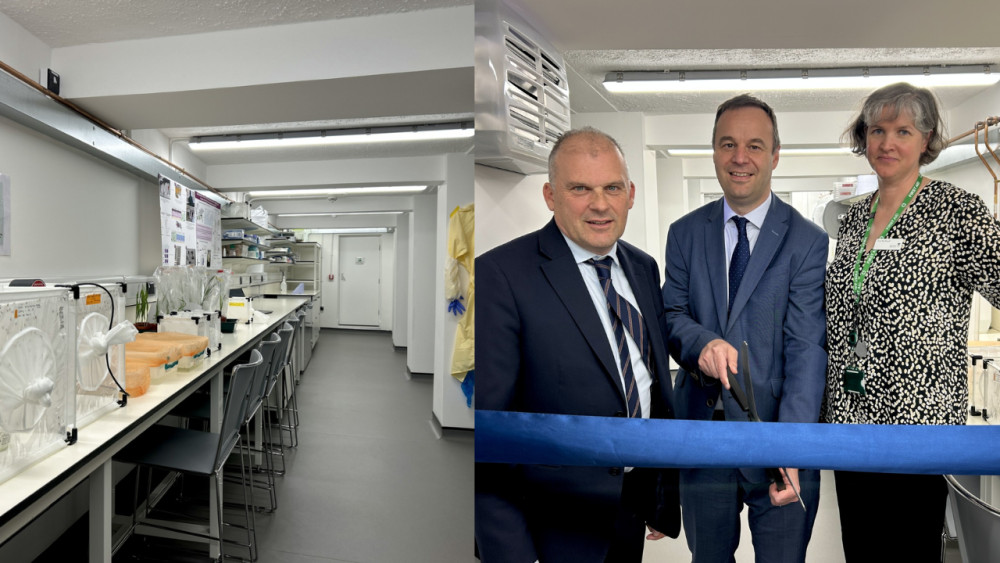


A major new insect research facility has officially opened at Keele University which aims to transform efforts to combat deadly diseases such as malaria.
The state-of-the-art insectary - one of the largest and most advanced of its kind at any UK university - will allow researchers to study, manipulate and control insect species that have a profound impact on global health and agriculture.
The facility, which will also help to advance crop protection and develop more sustainable alternatives to chemical pesticides, features seven independent, walk-in, climate-controlled chambers capable of housing multiple insect pest species.
These include major tropical disease vectors - such as Aedes aegypti, Culex quinquefasciatus, and Anopheles gambiae, the primary mosquito responsible for spreading malaria in sub-Saharan Africa - as well as agricultural pests that significantly impact farming productivity, including locusts, aphids and fruit flies.
Dr Tim Harvey-Samuel, lecturer in arthropod genetics and lead for the insectary, said the new facility would cement Keele's position as one of the leading centres for entomological research excellence in the UK.
"The new insectary is really a world-class facility for this kind of research. It is one of the largest and newest insectaries of its type at a UK university," he said.
"What distinguishes the insectary is its scale, flexibility and state-of-the-art design, enabling the safe housing of multiple insect species, each maintained under carefully controlled and highly specific climatic conditions.
"It provides us with the tools to undertake cutting-edge research into how insects transmit disease and intervene effectively, while also improving food security by reducing crop losses. Crucially, it supports the development of more sustainable solutions, helping to reduce reliance on chemical insecticides."
Download our Nub News App!
- It’s FREE and available now- Breaking news notifications
- Your Town in Your Pocket


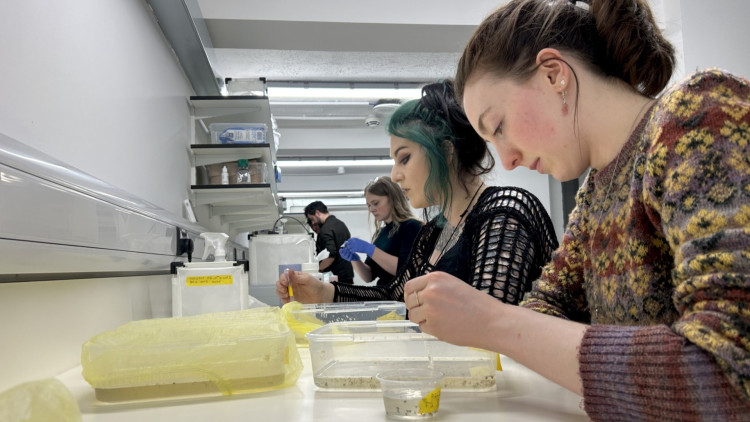
The facility has been developed with the help of a £623,000 grant from the Wolfson Foundation, an independent, grant-making charity with a focus on education and research.
Its aim is to contribute to civil society by supporting high-quality projects in science, health, heritage, humanities and the arts.
Combined with specialised equipment for insect genetic modification and the University's existing Containment Level 3 (CL3) pathogen vector-infection suite, Keele explained that the facility offers a "rare and powerful" integrated capability.
Researchers can house, modify and infect pest insects within a single, secure environment, allowing detailed investigation of pathogen-host interactions under precise and reproducible conditions.
Dr Harvey-Samuel added: "This unique combination of infrastructure positions Keele at the forefront of insect and pathogen research, enabling scientists to address complex questions and pursue lines of inquiry that are currently beyond the reach of most UK institutions."
A central focus of the work in the insectary will be tackling malaria, which remains one of the leading causes of death among children under five in parts of Africa.
Scientists at Keele will investigate ways to genetically modify mosquitoes so they are less capable of transmitting the disease.

Beyond global health, the research has wide-ranging implications for agriculture, biodiversity, and climate resilience. By improving methods to control pest species without heavy chemical use, the work could help protect crops while reducing environmental impact.
The new facility has been named after Edith Patch, a pioneering American entomologist known as a world-renowned expert on aphids, the first female president of the Entomological Society of America, and a trailblazer for women in science.
Paul Ramsbottom OBE, chief executive at the Wolfson Foundation, said: "From our founding in the 1950s, the Wolfson Foundation has believed in the importance of investing in capital infrastructure to unleash the full potential of research and education, and we are delighted to be supporting the university with facilities whose impact will be felt not just in the UK but worldwide.
"Insect-transmitted diseases present a wide and growing range of threats – to human health, to livestock and to crops – often with particularly devastating effects in the Global South.
"Research in Keele's School of Life Sciences is addressing urgent topics such as plant-insect interaction, sustainable pest management and transmission of malaria, all of it reliant on cutting-edge insectary facilities and environmentally controlled laboratories.
"It is a huge pleasure to see the new Edith Patch Insectary being formally launched, and we look forward to hearing more about the important work it will enable in the years to come."
Keele also hoped that the facility will play a key role in training the next generation of scientists.
PhD and Master's students will gain hands-on experience conducting research in a state-of-the-art environment, working alongside experts in entomology and disease biology.

Emily Chesters, a PhD Student at the Centre for Applied Entomology and Parasitology at Keele, said: "Students like me are going to benefit enormously by conducting real-life research in one of the most cutting-edge facilities of its kind in the UK, alongside researchers actively engaged in scientific practice."
This is a sponsored article. If it wasn't for sponsors like Keele University, our news site would not be possible - thank you.
If you own a local business and would like to sponsor us, get in touch at [email protected].
CHECK OUT OUR FREE NEWSLETTER!
5 TOP STORIES EVERY FRIDAY!
Click here to sign up: stoke newsletter

Share: